Milk occupies an unusual place in the Western diet. It is the only food most of us are given before we have teeth, and the only one we are told to keep drinking for the rest of our lives.
But biologically, weaning is supposed to be an ending, not the start of a lifelong habit. So, what does the evidence actually say about whether adults need dairy at all, and what are the alternatives if they choose not to have it?
The biology of weaning
Every mammal produces the enzyme lactase as an infant, allowing it to digest the lactose in its mother's milk. In the vast majority of mammals, including most humans worldwide, lactase production switches off after weaning, because there is no further evolutionary reason to keep digesting a sugar that is no longer part of the diet. Around 65% of adult humans downregulate lactase in this typical mammalian way and become lactose malabsorbers to some degree (Ranciaro et al., 2014). Only a minority of adult humans, most concentrated in Northern Europe and parts of Africa, the Middle East and South Asia, carry genetic mutations for lactase persistence that allow them to keep digesting fresh milk into adulthood, a trait that spread rapidly over the last 7,000 to 10,000 years alongside the rise of dairy farming (Evershed et al., 2022). In other words, adult milk drinking is a relatively recent cultural and genetic adaptation layered on top of an older mammalian default, not evidence that the human body was designed to need dairy indefinitely.
This matters for framing but not for the practical question people actually want answered, which is whether dairy is nutritionally necessary after childhood. It is not, in the sense that no single food is nutritionally essential. What dairy provides, principally calcium, protein, iodine and vitamin B12, can be obtained from other sources. The more useful question is how well those alternatives perform in practice, and what the evidence says about health outcomes with and without dairy in the diet.
What actually happens if you are lactose intolerant
Lactose intolerance is not an allergy. It is caused by insufficient lactase, meaning lactose passes undigested into the large intestine, where it draws water into the gut by osmosis and is fermented by resident bacteria, producing hydrogen, carbon dioxide and sometimes methane. This combination is what causes the characteristic bloating, cramping, wind and diarrhoea, typically within thirty minutes to two hours of consumption (Deng et al., 2015). It is a dose-dependent, gut-level reaction, distinct from a genuine milk allergy, which involves the immune system reacting to milk proteins such as casein or whey and can produce a much wider range of symptoms, including skin and respiratory reactions.
Sensitivity varies considerably between individuals. Many people who are lactose intolerant can still tolerate moderate amounts, and symptoms tend to scale with the dose consumed and whether it is spread across the day rather than taken all at once. Fermented and hard dairy products are often tolerated even by people who react badly to milk, because the bacterial cultures used in yoghurt and kefir production break down much of the lactose during fermentation, and the cheese-making process removes most lactose along with the whey, leaving hard, matured cheeses such as cheddar, Parmesan and Swiss with only trace amounts. This means a lactose intolerance diagnosis does not necessarily mean total dairy avoidance, though for people who do choose to avoid dairy entirely, whether by preference, animal welfare, planetary health (Ritchie, 2022), or because symptoms are severe, the plant-based calcium sources discussed below remain a sound route to meeting requirements.
What the fracture and bone density evidence actually shows
The strongest public health argument for continued dairy consumption is bone health, so this is where the evidence deserves the closest look. The picture is more mixed than dairy industry messaging tends to suggest.
Several large meta-analyses of prospective cohort studies have found no protective association between total milk intake and hip fracture or osteoporosis risk. A systematic review and meta-analysis by Malmir, Larijani and Esmaillzadeh (2020) concluded that a higher intake of milk and dairy products was not associated with a lower risk of osteoporosis or hip fracture when only cohort studies, the more reliable design, were included. A separate non-linear dose-response meta-analysis of dairy intake and hip fracture across almost 487,000 adults found that milk consumption was associated with a 7% higher risk of hip fracture per 200 grams consumed daily, rising to a 15% higher risk at 400 grams a day, while total dairy intake overall showed no clear association either way (Mishra et al., 2023). Against this, other meta-analyses reach more favourable conclusions, particularly for yoghurt and cheese rather than milk specifically, and a 2025 umbrella review concluded that dairy consumption, especially milk and yoghurt, is modestly associated with reduced fracture risk in older adults, while flagging that the underlying evidence remains inconsistent across studies (Sharifan et al., 2025).
This inconsistency is sometimes summarised as the "calcium paradox": countries with the highest dairy intake, largely in North America, Australia and Northern Europe, tend to report higher rates of hip fracture than countries with much lower dairy intake across Asia and Africa. It is tempting to read this as evidence that dairy is actively harmful to bones, but the comparison is confounded by numerous factors that differ between these populations, including body size, physical activity, sun exposure and vitamin D status, genetics, life expectancy and diagnostic practices. Hip fracture risk rises steeply with age, so countries with older population profiles will inevitably record more fractures than countries with younger ones, independent of any dietary difference. Reviews of the international variation in hip fracture rates note that the lower crude incidence seen in some developing countries partly reflects a younger population structure rather than a genuinely lower underlying risk, citing Latin America, where only around 5.7% of the population was over 65 at the time of review, as an example (Dhanwal et al., 2011). The International Osteoporosis Foundation has specifically pushed back on the idea that osteoporosis is rare in Asia, noting that fracture rates there are projected to rise sharply as populations age and that underdiagnosis, not genuine protection, explains much of the apparent gap (Mithal et al., 2013). The more defensible conclusion from the cross-national data is not that dairy causes fractures, but that total dairy intake is a weak predictor of bone health on its own, and that other lifestyle factors matter at least as much.
Can calcium needs be met without dairy?
The clearest test of this question comes from the EPIC-Oxford cohort, a long-running UK study that has followed meat eaters, fish eaters, vegetarians and vegans for decades. In the earlier 2007 analysis, vegans had a 30% higher rate of fracture than meat eaters, but this difference was substantially reduced once calcium intake was accounted for, and it disappeared almost entirely among vegans who consumed at least 525 milligrams of calcium a day, whose fracture rate was statistically indistinguishable from meat eaters (Appleby et al., 2007). A more recent analysis of the same cohort, with longer follow-up, again found a higher fracture risk among vegans, particularly at the hip, and again identified low calcium intake, alongside lower body mass index, as a major contributor (Tong et al., 2020). The consistent message across both studies is not that a plant-based diet inherently weakens bones, but that a plant-based diet low in calcium does, and that this is an entirely fixable dietary planning issue rather than a biological inevitability. The UK reference nutrient intake for calcium in adults aged 19 to 64 is 700 milligrams per day (British Dietetic Association, 2021), a target well within reach from plant sources with a little attention.
Plant-based calcium sources, and why bioavailability matters
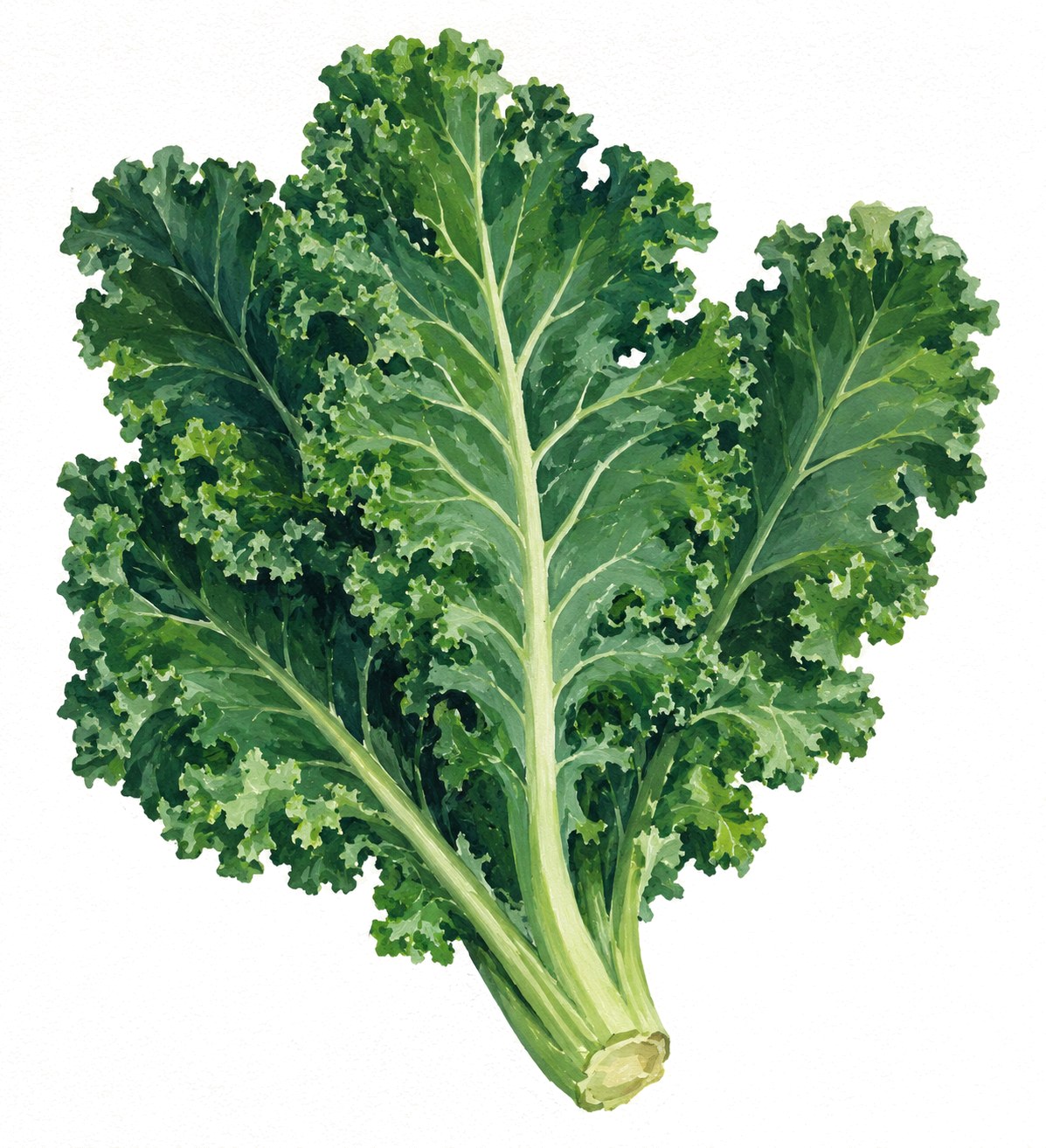
Total calcium content on a food label is only part of the picture, because calcium bound up with oxalates or phytates in some plant foods is poorly absorbed. Spinach, rhubarb, beet greens and almonds are high in oxalates and should not be relied on as calcium sources despite their calcium content, whereas low-oxalate brassica vegetables such as kale, broccoli, bok choy and cabbage, along with calcium-set tofu and fortified plant milks, are absorbed comparably well or better than dairy calcium.
A detailed 2023 laboratory study from the University of Nottingham directly compared the bioaccessible, meaning actually absorbable, calcium supply of 25 plant-based products against skimmed milk (Muleya et al., 2023). Kale came out on top of all plant foods tested, providing around five times more bioaccessible calcium per serving than a single serving of skimmed milk. Fortified white bread and finger millet were the next best sources. Moderate sources, requiring one and a half to three servings to match a serving of milk, included wholemeal bread and several bean varieties, including chickpeas and kidney beans. By contrast, the study found that plant-based milk alternatives, tofu, dried figs and tahini had surprisingly low calcium bioaccessibility, either because of oxalate and phytate content or because the calcium salts used for fortification, commonly tricalcium phosphate, are poorly soluble and therefore poorly absorbed. This is a useful, practical distinction: not all fortified plant milks are nutritionally equivalent, and checking the label for the type of calcium salt used, calcium carbonate and calcium citrate malate tend to perform better, is worth doing.
Sesame seeds and tahini made from unhulled seeds, blackstrap molasses, calcium-set tofu, and dark leafy brassicas remain reliable, well-evidenced contributors to plant-based calcium intake when eaten regularly and in reasonable quantity.
The bundle that comes with plant calcium: fibre and phytonutrients
This is where the case for plant-based calcium sources moves beyond simply replacing what dairy provides, and towards offering something dairy cannot. Milk, being an animal secretion, contains essentially no dietary fibre and, aside from small amounts of plant-derived phenolic compounds that pass through from the cow's own diet (Inglese et al., 2024), very little in the way of the phytonutrients associated with the protective effects of plant-rich diets.
Kale, broccoli, bok choy, chickpeas, beans and sesame seeds, by contrast, deliver their calcium alongside dietary fibre, folate, vitamin C, vitamin K and a wide range of polyphenols and glucosinolates. Fibre is fermented by the gut microbiome into short-chain fatty acids, which are linked to reduced inflammation and improved metabolic and colonic health, and dietary polyphenols undergo similar microbial transformation into bioactive metabolites (Gill et al., 2018). Because fibre and polyphenols are frequently consumed together in the same plant foods, and appear to influence each other's fermentation and bioactivity in the colon, there is a plausible synergistic benefit to obtaining calcium from a kale and chickpea stew rather than a glass of milk, even before accounting for any independent effects of dairy itself on health outcomes such as cardiovascular disease or certain cancers, which remain areas of ongoing and sometimes conflicting research.
The bottom line
Adults do not need dairy specifically to meet their nutritional requirements. Lactase persistence into adulthood is a genetic trait carried by a global minority, and the biological default for mammals, humans included, is to lose the capacity to digest lactose efficiently after weaning. The cohort evidence on dairy and fracture risk is genuinely mixed, with several large meta-analyses finding no protective effect of milk specifically, though yoghurt and cheese fare somewhat better in some analyses. What the evidence does show clearly is that adequate calcium intake, from whatever source, matters for bone health, and that a plant-based diet that falls short on calcium carries a real, quantifiable increase in fracture risk. The fix is not necessarily dairy. Kale, fortified bread, calcium-set tofu, tahini, beans and fortified plant milks with well-absorbed calcium salts can close that gap, and they bring dietary fibre and phytonutrients that milk simply does not contain. The practical takeaway is less about avoiding or embracing dairy as a moral position, and more about making sure calcium intake, from any combination of sources, actually adds up to something close to 700 milligrams a day. In plain terms, humans do not require dairy to meet their nutritional needs and a calcium target can be achieved by other means, such as kale, tofu and beans.